Shinjuku Gyoen National Garden Chrysanthemum Exhibition [2026]
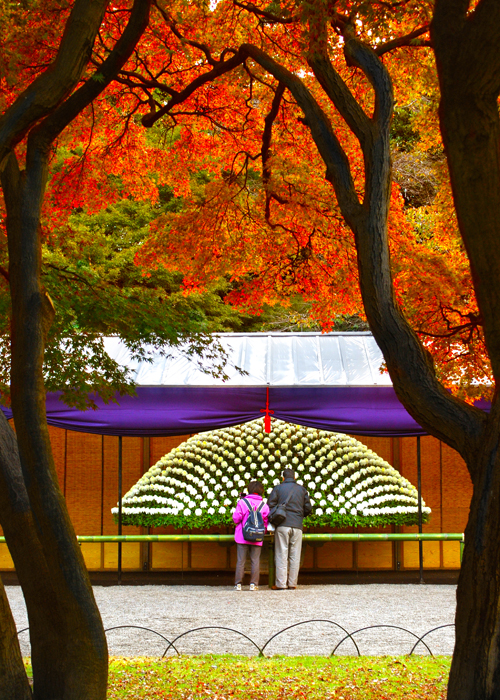
Every year from November 1 to 15, the Shinjuku Gyoen Chrysanthemum Exhibition is held in the Japanese Traditional Garden.
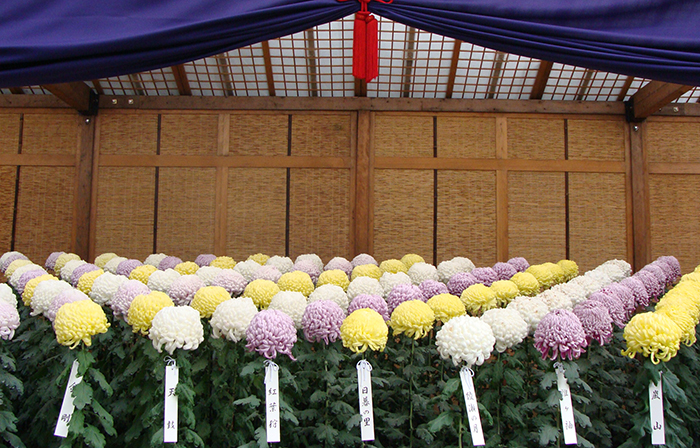
The exhibition features seven types of chrysanthemum displays, each arranged in a distinctive style. Beneath temporary shelters called *uwaya*, made from bamboo, reed screens, and wood, visitors can admire chrysanthemums carefully cultivated and trained using traditional techniques.
This annual exhibition is one of the highlights of autumn at Shinjuku Gyoen National Garden.
(Photo: Prize-winning entry in the 2019 Shinjuku Gyoen Photo Contest)
2026 Chrysanthemum Exhibition: Event Overview
Dates: November 1 (Sun)–15 (Sun), 2026
Venue: Japanese Traditional Garden, Shinjuku Gyoen National Garden
Hours: 9:00 a.m.–4:30 p.m. (Last admission: 4:00 p.m.)
Garden admission: Adults: ¥500; seniors aged 65 and over: ¥250; students (high school and above): ¥250; junior high school students and younger: Free
[Admission details]
[Getting here]
The Enduring Tradition of Chrysanthemums
The history of the Chrysanthemum Exhibition at Shinjuku Gyoen dates back to 1878, when the Ministry of the Imperial Household held a chrysanthemum viewing event at Akasaka Palace, then serving as a temporary imperial residence.
Since then, chrysanthemum cultivation and display techniques have been passed down through generations, and Shinjuku Gyoen has developed its own distinctive methods of training and displaying the flowers.
Today, the garden continues this tradition with chrysanthemums grown and arranged using a variety of techniques.
[Learn more about the history of the Chrysanthemum Exhibition]
Highlights of the Chrysanthemum Exhibition
The exhibition features seven types of chrysanthemum displays, each with its own distinctive characteristics.
Alongside the beautifully trained flowers, look out for the *uwaya* shelters and the surrounding garden scenery. Together, the chrysanthemums, traditional shelters, and garden landscape capture the beauty of autumn.
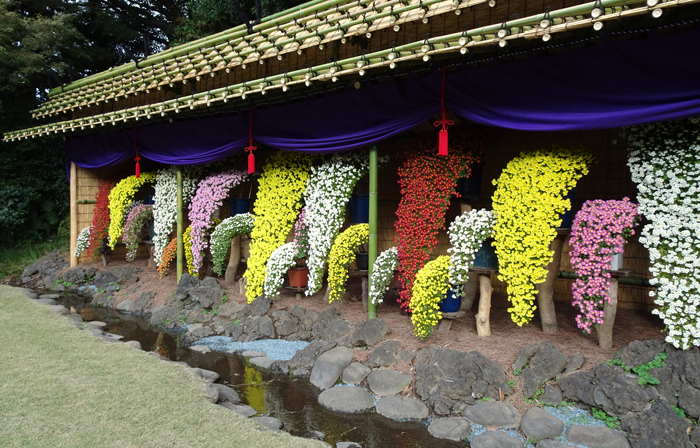
Kengai bed
This display recreates the appearance of wild chrysanthemums cascading from crevices in a rocky cliff.
Stems branching from a single plant are trained along a bamboo-and-wire framework to create the cascading shape.
Other highlights include the shelter made from bamboo and reed screens, and the stream flowing in front of the bed.
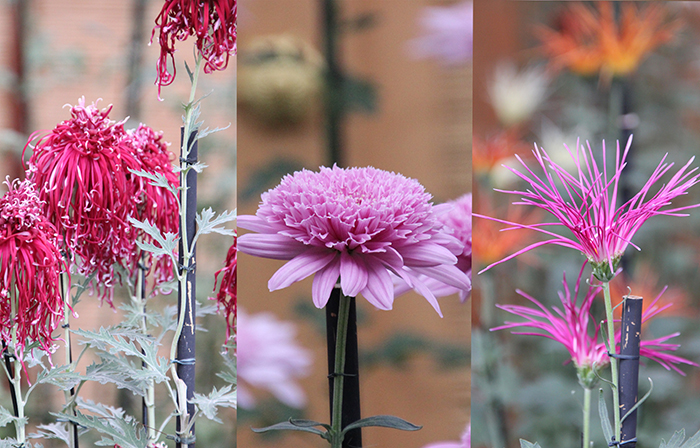
Ise, Choji, and Saga-giku bed
This bed brings together three types of “classical chrysanthemums”—Ise, Choji, and Saga—which developed distinctive characteristics in different regions of Japan.
Each has a different petal shape and flowering form. Comparing these differences is part of the enjoyment of this display.
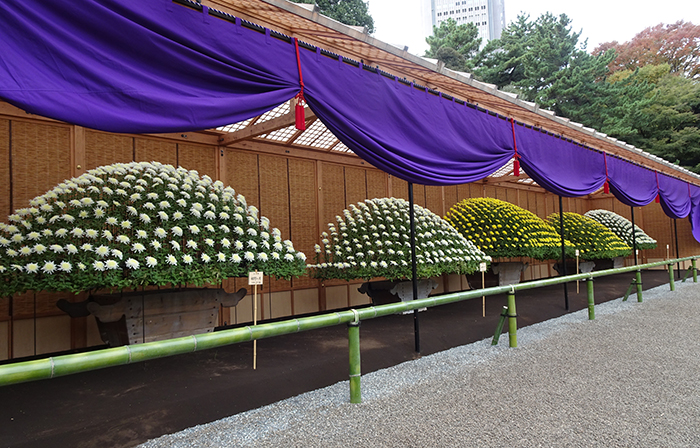
Ozukuri bed
Using a technique unique to Shinjuku Gyoen, a single chrysanthemum plant is cultivated and trained for more than a year to produce hundreds of flowers arranged in a dome shape.
The sight of so many flowers blooming together makes this one of the exhibition’s most spectacular displays.
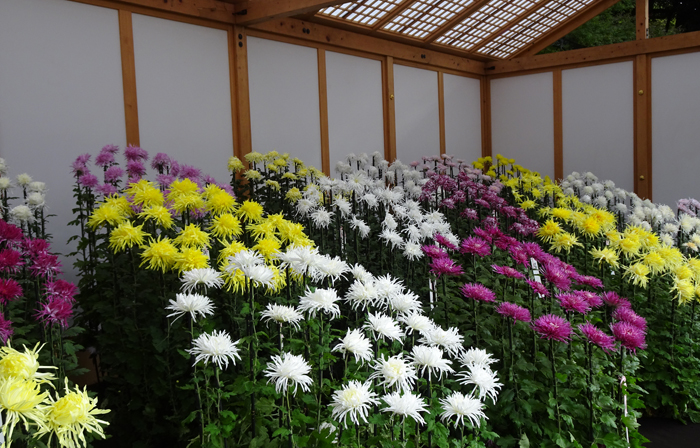
Edo-giku bed
Edo chrysanthemums are a traditional type developed in Edo, present-day Tokyo. Their petals change shape and color as the flowers open.
They are also known as *mai-giku*, or “dancing chrysanthemums,” with each variety changing in its own way.
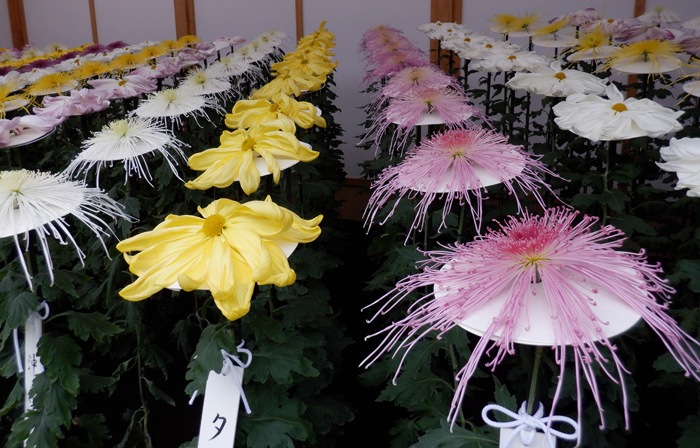
Ichimonji and Kudamono-giku bed
Ichimonji chrysanthemums have large flowers with a single layer of around 16 petals. They are also known as “Imperial Crest chrysanthemums” because their shape resembles the Imperial Family’s crest.
Kudamono chrysanthemums have tubular petals that radiate outward from the center.
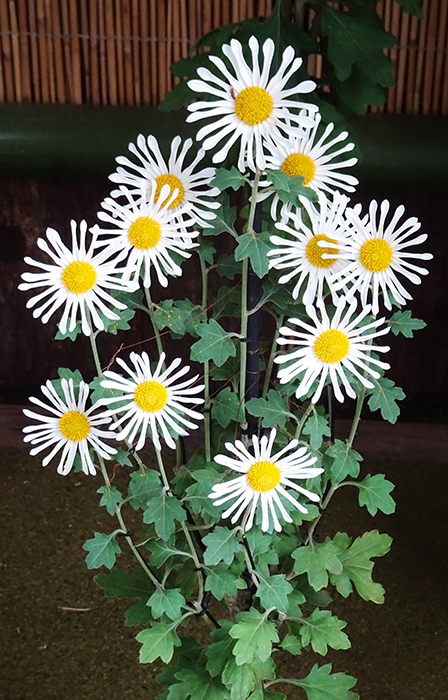
Higo-giku bed
Higo chrysanthemums are a traditional type developed in Higo, present-day Kumamoto Prefecture.
Their flowers have a single layer of flat or tubular petals, with distinctive gaps between them.
Although this is the smallest bed, details such as the dark soil and moss add to the beauty of the display.
Ogiku bed
Ogiku chrysanthemums have large, rounded blooms.
They are displayed using *tazuna-ue*, an arrangement style unique to Shinjuku Gyoen.
Arranged in a repeating sequence of yellow, white, and pink, the flowers create a striking display when they bloom together.
Exploring the Chrysanthemum Exhibition
The chrysanthemum beds are arranged to be viewed at their best along the designated route.
For a map of the exhibition and more information about each bed, please see the Chrysanthemum Exhibition pamphlet.
[Japanese Pamphlet]
[English Pamphlet]
[Chinese Pamphlet]
[Korean Pamphlet]
This Year’s Chrysanthemum Exhibition
Our latest blog posts share updates on preparations for this year’s exhibition, flowering conditions, and scenes from the garden.
[Latest Chrysanthemum Exhibition updates] (Japanese only)
More to Enjoy During Your Visit
After exploring the Chrysanthemum Exhibition, take a break at one of the cafés or restaurants in and around the Japanese Traditional Garden.
Here are a few places to enjoy a meal, Japanese sweets, or a stroll in a kimono.
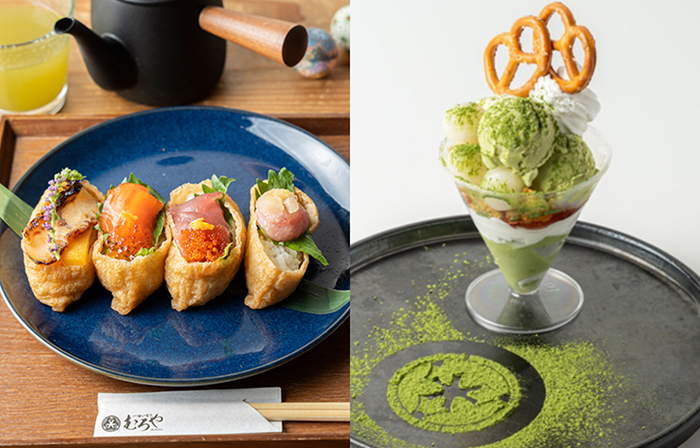
Dining | Rakuutei Shinjuku Gyoen Muroya
Located in the Japanese Traditional Garden, Muroya serves inari sushi—rice in sweetened tofu pockets—as well as Japanese sweets and other treats.
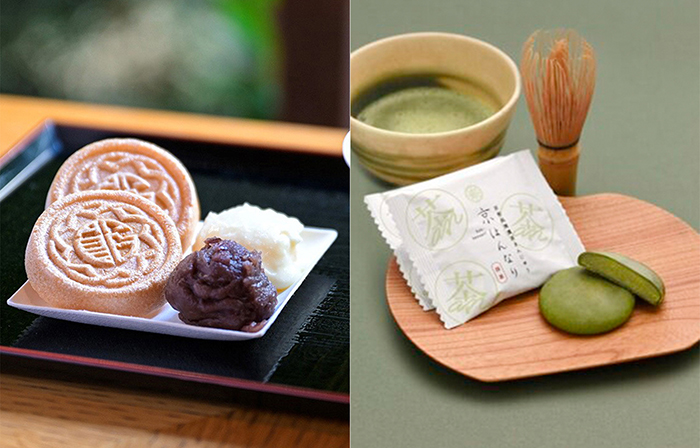
Sweets | Shouten-tei Shinjuku Gyoen Anon
Take a break from your stroll with Japanese sweets made with sweet red bean paste and a cup of tea.
Sweets are also available to take home as souvenirs.
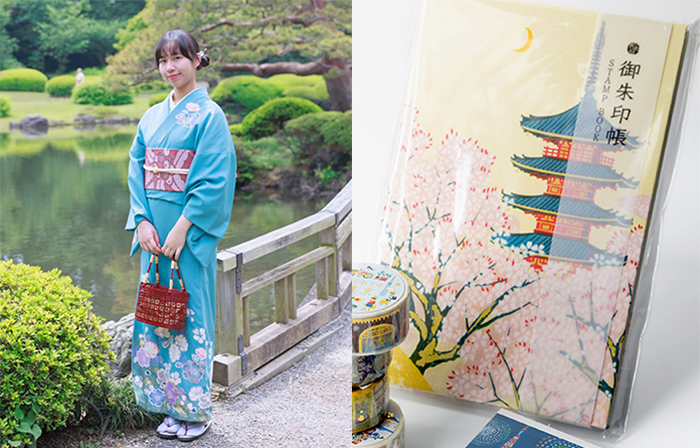
Kimono Rental | Rakuutei Koichi Store
Enjoy a stroll in a kimono through the Japanese Traditional Garden, where the Chrysanthemum Exhibition takes place.
The shop offers kimono rentals and a selection of traditional Japanese goods.
Shinjuku Gyoen also has a variety of other places to eat, shop, and rest.
Enjoy a meal, a sweet treat, or some souvenir shopping as part of your visit to the Chrysanthemum Exhibition.
For details about individual facilities, visit our website featuring dining, souvenirs, and activities at Shinjuku Gyoen, the Imperial Palace Outer Gardens, and Kyoto Gyoen.
[Explore dining, souvenirs, and activities at the three gardens] (Japanese only)
Chrysanthemum Exhibition: Visitor Information
Dates: November 1–15 every year
Venue: Japanese Traditional Garden, Shinjuku Gyoen National Garden
Garden admission: Adults: ¥500; seniors aged 65 and over: ¥250; students (high school and above): ¥250; junior high school students and younger: Free
Opening hours during the exhibition: 9:00 a.m.–4:30 p.m. (Last admission: 4:00 p.m.)
Closed days: None during the exhibition period
[Admission Information]
[Getting here]
[Garden Map]
[Accessibility information]
Related Exhibitions
You can also learn more about chrysanthemums and the work behind the Chrysanthemum Exhibition at these related exhibitions.
[Chrysanthemum Panel Exhibition]
Discover the highlights and history of the Chrysanthemum Exhibition, along with the types of chrysanthemums on display.
Dates: October 27 (Tue)–November 15 (Sun), 2026
Venue: Art Gallery, Shinjuku Gate Information Center
[Behind the Scenes: The Chrysanthemum Team]
Learn about the work of the Chrysanthemum Team, which prepares the flowers for the exhibition, and the techniques used to cultivate and train them.
Dates: September 15 (Tue)–November 15 (Sun), 2026
Venue: Service Center
*Information is subject to change. Please check the latest official information before your visit.
 新宿御苑
新宿御苑
 新宿御苑
新宿御苑